Home » AC – Models » AC Cobra MkIV (Autokraft/Superblower/CRS)
Autokraft AC Cobra MkIV
Click to enlarge image
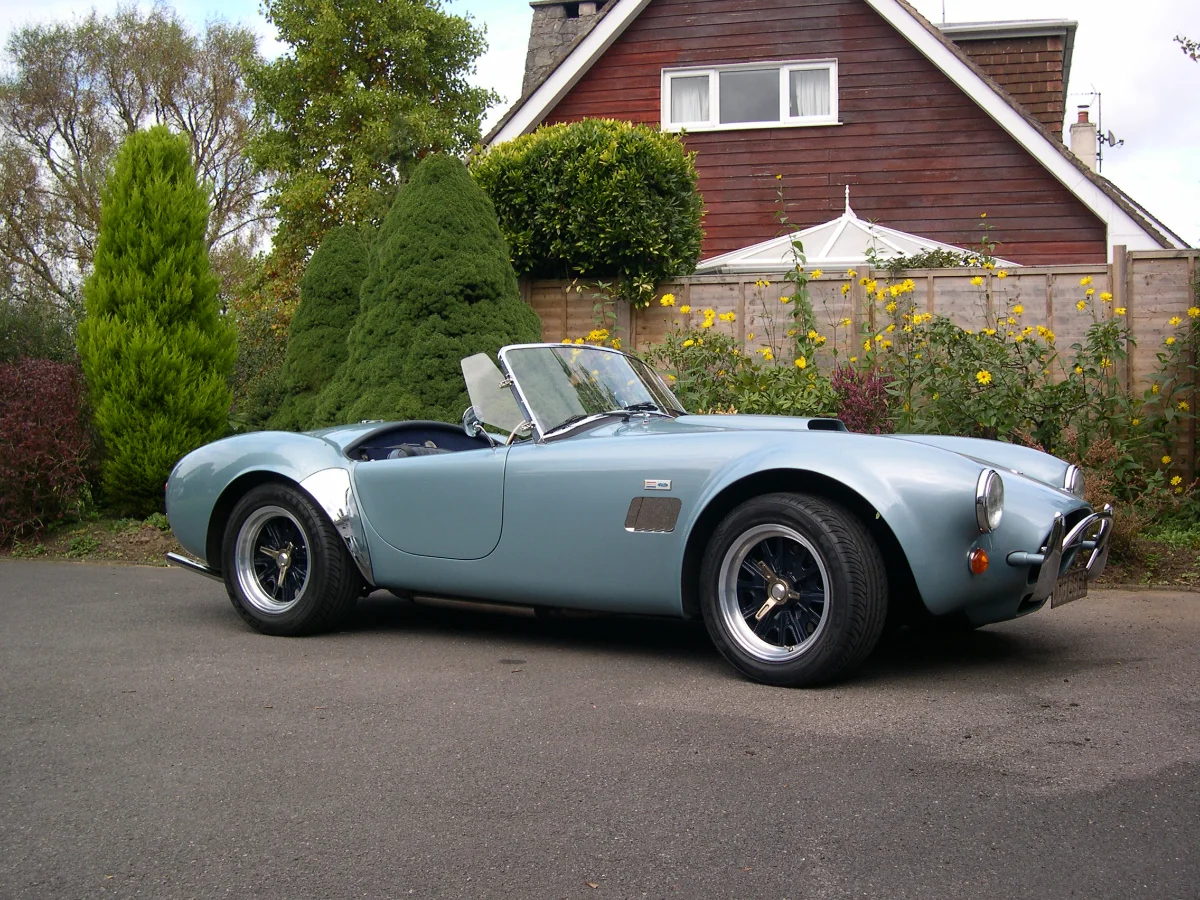
A 1989 Autokraft AC Cobra MkIV
Click to enlarge image
Autokraft AC Cobra MkIV Lightweight
The MkIV is an updated version of the final coil sprung AC Cobra. In the mid 1970s, Brian Angliss was repairing and rebuilding Cobras trading as Cobra Parts. He acquired most of the original tools and jigs from AC Cars and such was the quality of his work, in 1982 he gained a legal agreement with AC to use AC on his cars for a period of 25 years.
The cars were badged AC and Autokraft and were built in premises at the famous Brooklands racetrack in Weybridge, Surrey. The cars were constructed entirely in-house with each car taking around 900 man hours to complete. The original Cobra body was slightly revised to give a larger cockpit area with a fully adjustable steering column and trimmed with the best quality Connolly hide and Wilton carpet.
The earliest cars were shipped to the USA after Type Approval was given, some without engines and gearboxes as it had been with the production of the original Cobras. In 1982 a LHD MkIV was exhibited at the Earls Court Motor Show and in 1986 Angliss bought the controlling interest in AC Cars from the Hurlock family (the then owners) and became AC Cars Ltd. Angliss and Ford joined forces in 1989 and Ford granted the use of the Cobra name to the new company. Around 450 were built at Brooklands, the majority going to the USA. A small run of 26 Lightweight versions were produced which were built broadly to the 60s specification but with an uprated 360bhp engine.
Click to enlarge image
Autokraft AC Cobra Mk IV
AC Cobra Superblower
Click to enlarge image
AC Cobra Superblower Spirit of Brooklands No 2
Click to enlarge image
AC Cobra Superblower in ACOC Sprint mode
The Superblower is in essence a supercharged version of the Mk IV Cobra. Only 28 Superblowers were manufactured. The first car was built in 1997 using the Ford 5 litre V8 (302) unit as used in the Mustang coupled to a 5 speed Borg Warner T50D manual gearbox. The engine benefits from electronic fuel injection. In the early cars the Supercharger fitted was a Paxton. This was subsequently replaced by a Powerdyne unit.
The first 8 cars bore the chassis numbers of the Mk IV in a semi random order. The prefix was ACG. From 1999 to the final car manufactured in 2001 the next 20 cars were given their dedicated chassis prefix starting with ACSB 7001. Some ex-factory engine modifications were needed to be made to the cars. These included the repositioning of the supercharger sensor, uprated fuel pump and filter and replacing the fuel lines with larger bore Aeroquip hoses. This gave the Superblower a genuine 355+ BHP.
AC Cobra MkIV CRS
Click to enlarge
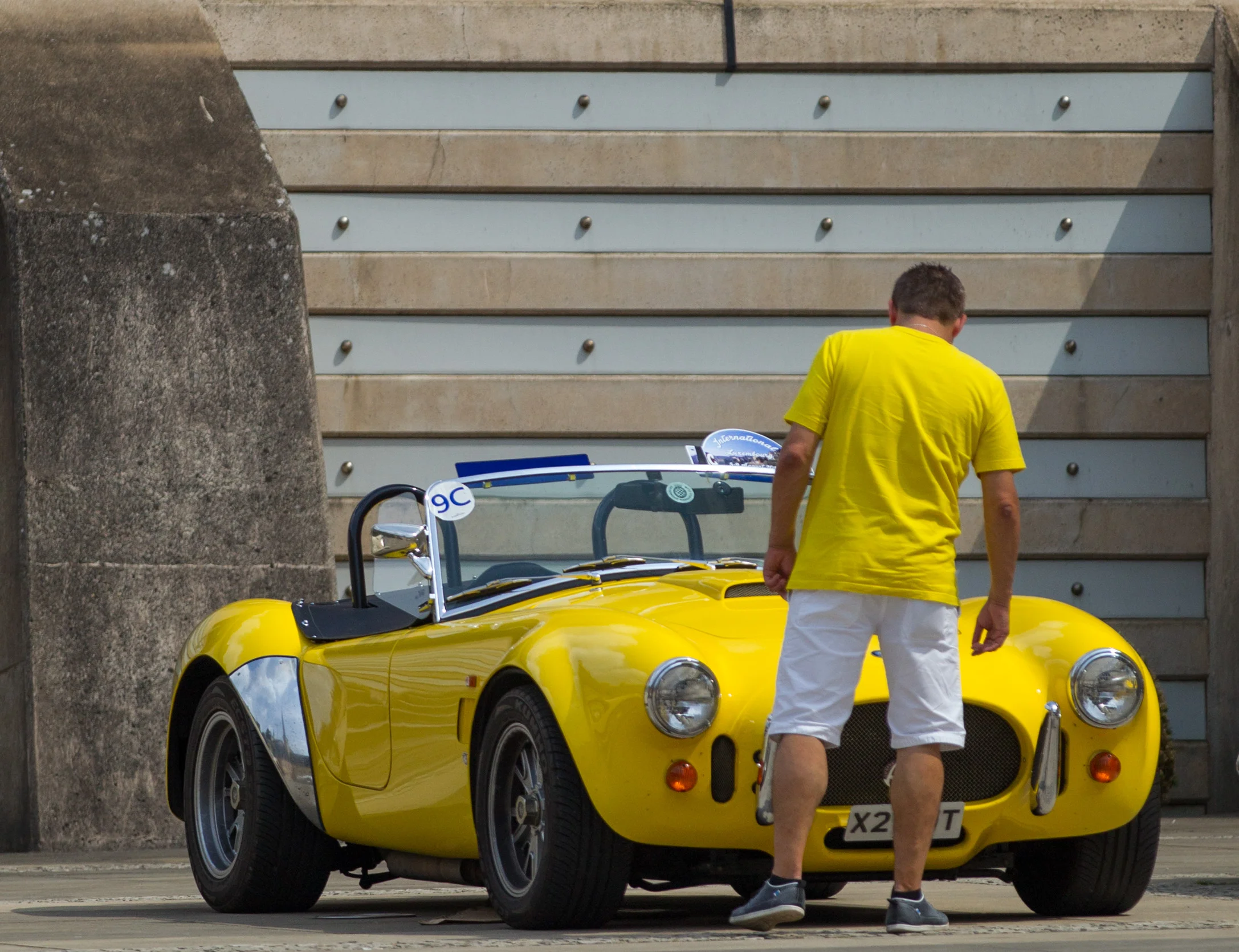
AC Cobra CRS at the Luxembourg International
Click to enlarge image
AC Cobra CRS 212SC fitted with a Lotus V8 engine
THE CRS is the most affordable AC for a generation. It has won a strong following from enthusiasts of the original Cobra model who recognise the excellent value of the new car. It puts AC ownership within the grasp of a much wider circle than is possible with the company’s traditional handcrafted aluminium-bodied supercars.
In specification, the CRS closely resembles the Cobra family of supercars, with the sturdy tubular steel chassis of all genuine Cobras, together with a normally aspirated version of the traditional US Ford 5-litre V8 power unit. Significant weight savings have been made possible through the use of a one-piece body shell of carbon-fibre. Pre-impregnated bodies are formed in a high temperature (120oC) autoclave to ensure exceptional quality levels, utilising laminated carbon-fibre cloth and thermoset epoxy resin in technology taken directly from today’s Formula 1 cars. The car is assembled and painted by AC to ultra-high standards.
The CRS engine develops 225 bhp at 4,200 rpm and 300 ft/lbs of torque at 3,200 rpm. Performance is 0-60 mph in 5 seconds and a top speed of 145 mph. The car uses a five-speed gearbox together with a Hydratrak limited slip differential, independent front and rear suspension and rack-and-pinion steering. There are disc brakes all round, ventilated at the front. 37 were produced including three with the Lotus V8 engine that had been designed by AC’s then current technical engineer, John Owen.
Click to enlarge
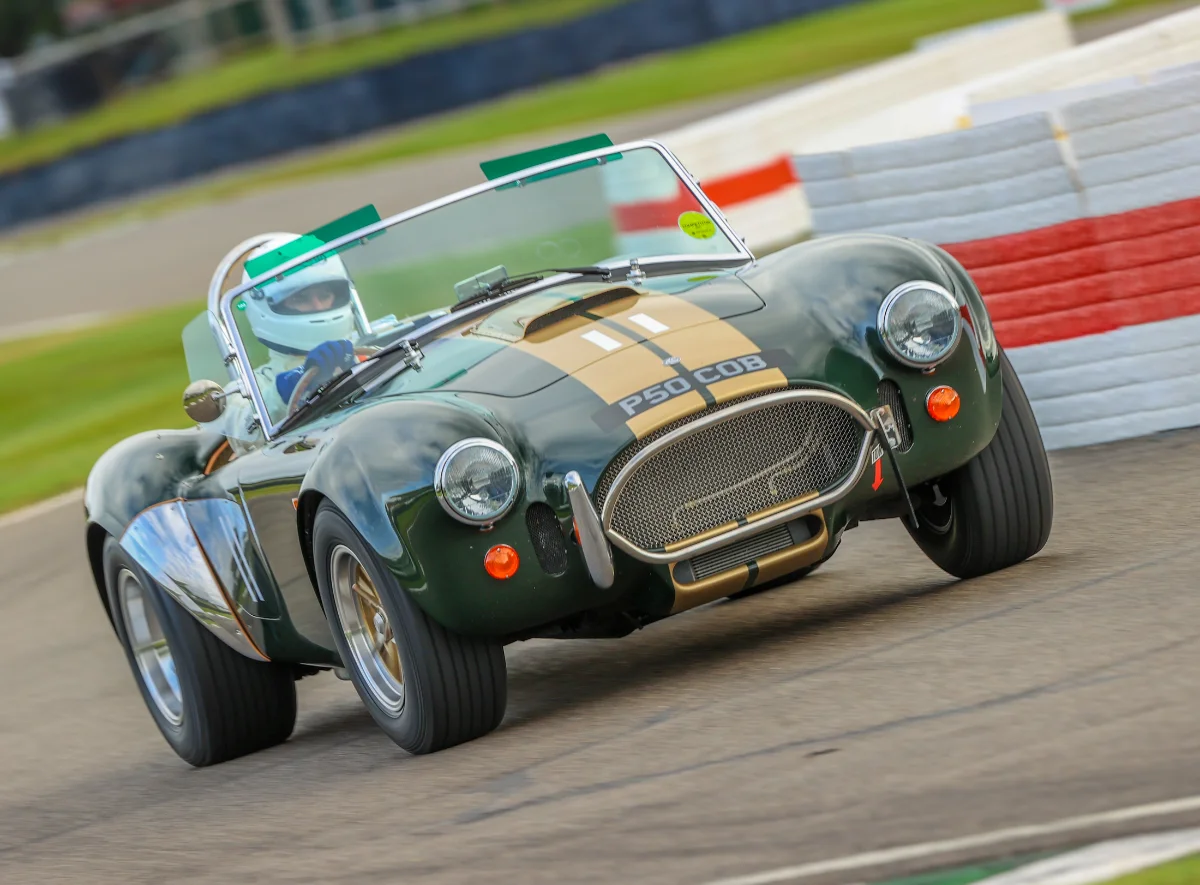
The final Superblower, CRS and MkIV at Goodwood
Registers for AC Cobra MkIV (Autokraft/Superblower/CRS) and further information
If you would like access to the Registers, articles, and further images for these models, you will need to either login as a member and head to the members’ menu bar and model directory, or become a member to access them.